
July 6, 2026 · Venture Pool Company
Pool Automation and Smart Tech: What's Worth It, What's a Gimmick
You can run a modern pool from your phone — schedules, heater, lights, spa. Here's my honest ranking of which pool technology earns its cost and which is a demo that never gets used.
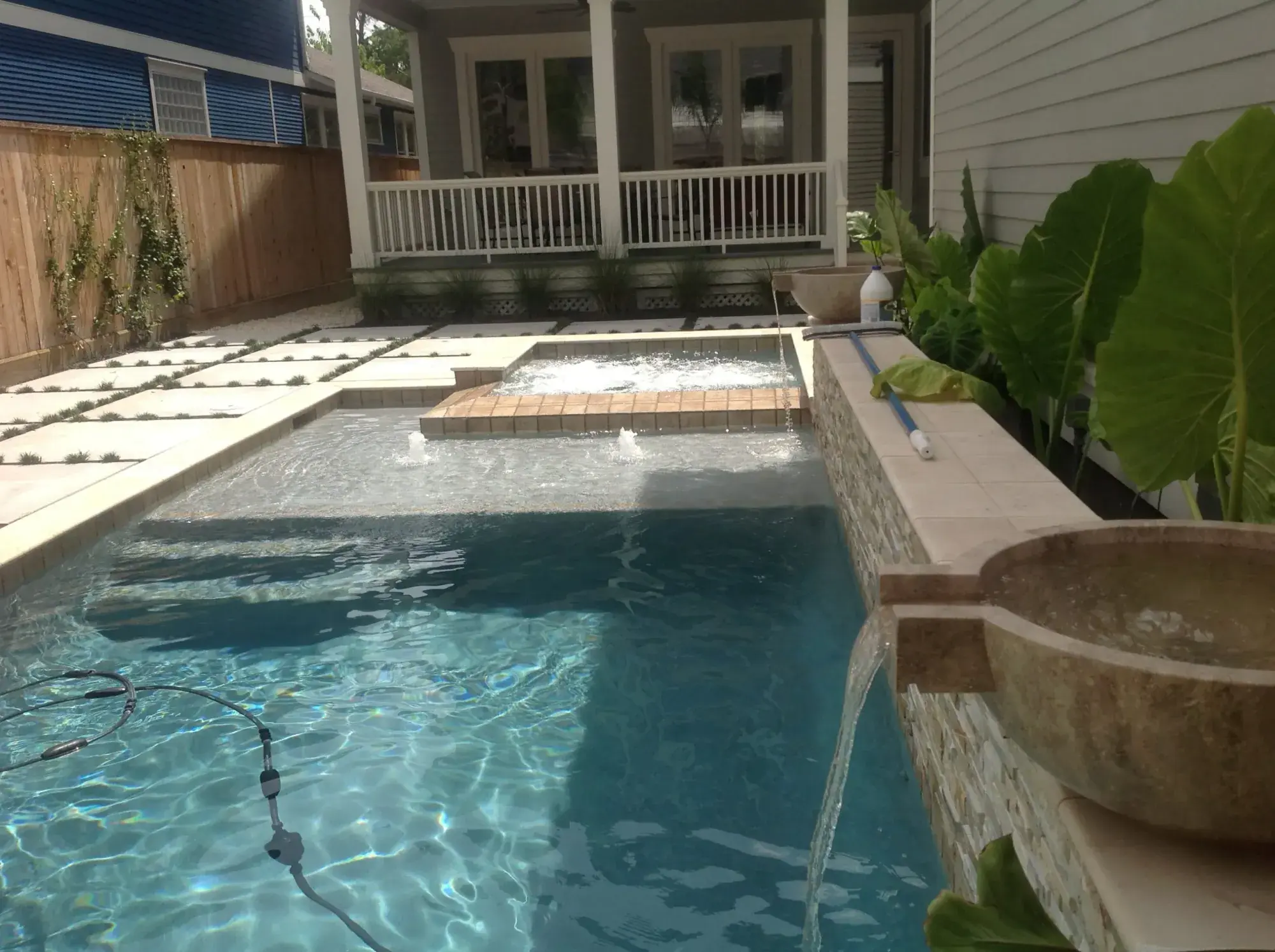
Every year some new piece of pool tech shows up promising to revolutionize the backyard, and every year I get asked whether it's worth it. After installing this stuff across Houston for two decades, I've got a simple mental model: the technology that automates a chore earns its keep; the technology that adds a dashboard usually doesn't. Here's the field guide.
The clear winners
Variable-speed pumps. Not glamorous, but the undisputed champion of pool technology from the last twenty years. They run at exactly the speed each job needs instead of full-blast-or-nothing, which makes them dramatically cheaper to run — several hundred dollars a year for most Houston pools — and so quiet you'll wonder if they're on. They also filter better, because long, slow circulation beats short, violent circulation. If your pad still has a single-speed pump, stop reading about gadgets and fix that first.
Automation with a heater or spa. This is where automation goes from nice to non-negotiable. The killer feature isn't the app itself — it's sitting at dinner across town, tapping "spa on," and stepping into 102-degree water twenty minutes after you walk in the door. Every customer with a spa who's added automation says some version of the same thing: they use the spa three times as much as they used to, because it stopped requiring a trip to the pad and a valve-turning ritual.
Salt system integration. If you run a salt system, having it on the automation brain means chlorine output, pump schedule, and freeze protection all coordinate themselves. One less thing to think about, which is the entire point.
Freeze protection, automated. Quietly one of the most valuable features in Texas. The system watches the temperature and runs the pump on freezing nights whether you remembered the forecast or not. After every hard freeze, the pools we see with cracked equipment are almost never the automated ones.
The middle tier — fine, but know why
LED lighting on the app. Genuinely useful — schedules, colors, one-tap scenes — and since LED lights pair with whatever automation you install, it comes along mostly free.
Wi-Fi chemistry monitors. Floating sensors that report chlorine and pH to your phone. Decent ones have gotten better, and for a data-minded owner they're a fun early-warning system. My caveat: they tell you the chemistry drifted; somebody still has to fix it. A sensor plus nobody acting on it is just a subscription to bad news.
The gimmick shelf
Voice control for the pool. Telling your speaker to warm the spa demos great at a party, exactly once. The app does the same thing more reliably.
App-controlled everything on a basic pool. If your pool is a pump, a filter, and a light — no heater, no spa, no features — a modern variable-speed pump's onboard scheduler plus a decent LED light covers 90% of what automation would do, for a fraction of the cost. I'd rather see that budget go to the pump upgrade or a renovation fund.
The honest playbook
- Variable-speed pump first. Always.
- Automation when there's a heater or spa in the picture — or during a new build, where adding it is cheap and retrofitting later isn't.
- Lighting rides along.
- Gadgets last, if ever.
Modern equipment, sized and installed right, makes a pool cost less to own and easier to love — that's the whole game. Want an honest read on your pad? Our TDLR-licensed techs will tell you what's worth upgrading and what's fine as-is. Call 713.462.0762 or request a free quote.
Frequently asked questions
A quality automation system installed on an existing pool typically runs $1,500–$3,500 depending on how much equipment it controls — pump, heater, lights, valves, salt system. It's most cost-effective installed during an equipment upgrade or a new build.
If you have a heater or a spa, yes without hesitation — being able to start the spa from your phone an hour before you get home is the feature people say they'd never give up. For a basic pool with just a pump and light, a good timer and a variable-speed pump's built-in scheduling get you most of the way for less.
A variable-speed pump, and it isn't close. Quieter, dramatically cheaper to run — typically several hundred dollars a year in electricity savings — and it improves filtration by running longer at low speed. Automation is the best second act after the pump is modern.
Ready to talk about your pool?
Tell us what you need and we'll get back to you fast — usually the same day.
Keep reading
- How Much Does Pool Cleaning Cost in Houston? Here Are Our Actual Prices
Most pool companies make you call for a price. Here's exactly what weekly pool cleaning costs in Houston — our real plans, our real rates, and what moves the number up or down.
- What Pool Resurfacing Really Costs in Houston (From a Guy Who Writes the Quotes)
Real numbers, what actually drives them up or down, and how to read a resurfacing quote so you never get surprised. The pricing conversation I have at kitchen tables, written down.
- Pool Deck Resurfacing in Houston: Your Options, Honest Costs, and What Holds Up
Cracked, spalling, or just dated — the deck ages faster than the pool in Houston. Here's the full options ladder from reseal to travertine, with real per-square-foot numbers and what our clay soil does to each choice.