
July 6, 2026 · Venture Pool Company
LED Pool Lighting: Why It's the First Upgrade I Recommend
If your pool still runs an old incandescent light, this is the cheapest transformation available in the entire pool industry. Here's the case for LED, what it costs, and the one safety rule that isn't optional.
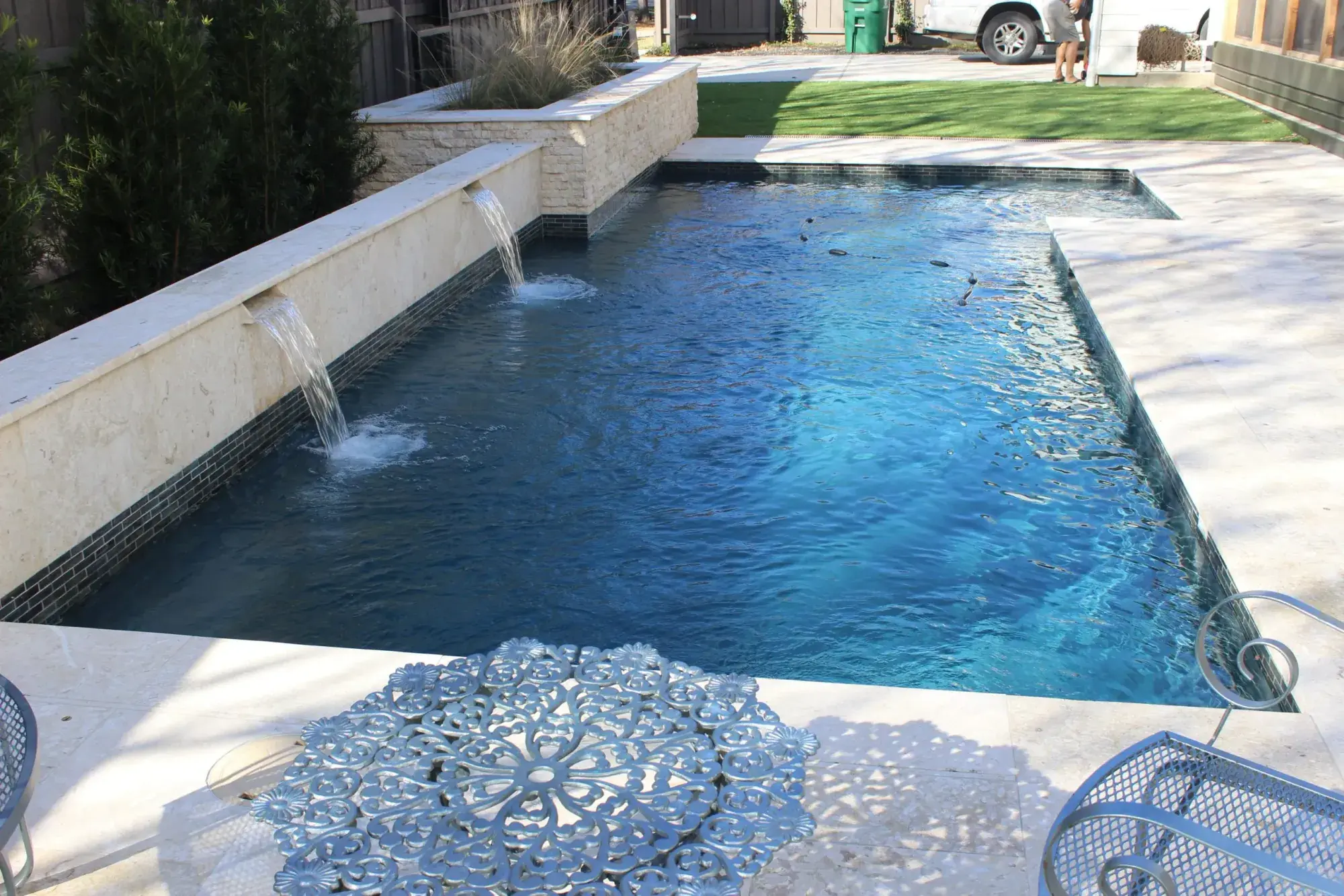
If I could pick one upgrade to show off what modern pool equipment can do, it wouldn't be the fancy heater or even the variable-speed pump — it'd be lighting. Nothing changes how a pool feels for less money. A pool you only looked at in daylight becomes the best thing in the backyard at 9 PM, and in Houston — where half our swimming happens after the sun finally lets up — that's not a small thing.
What you actually get out of the swap
Light quality, first. An old incandescent pool light makes a yellowish hot spot on one wall. A modern LED fills the pool with even, saturated color — whites that look like moonlight, blues that make the water glow, and full color programs when the kids want the pool to look like a party. If you've seen a neighbor's pool glowing that impossible blue at night, that's just LED doing its job.
The electricity math. The incandescent fixtures in most older Houston pools draw 300–500 watts. The LED that replaces them draws 20–50 for more light. Run your light four hours an evening through a Houston summer and the swap quietly pays a chunk of its own cost back — and keeps paying every year.
Bulb life. Incandescent pool bulbs were good for a season or two, and replacing one means pulling the fixture up onto the deck. Quality LEDs run 7–15 years in normal use. It's the difference between a recurring chore and something you forget you did.
What it costs, honestly
A good color-LED fixture, installed, typically lands between $700 and $1,200 — the range depends on the fixture brand, whether your niche and cord are in good shape, and how the light integrates with any automation. If we're already on the pad doing an equipment refresh, or the pool is drained for a resurface, the incremental cost drops — which is why I always bring lighting up during those projects. Doing it while the pool is empty is trivial; doing it as a standalone later is a whole separate visit.
One buying opinion: get the color model, even if you think you'll only ever use white. The price difference has shrunk to almost nothing, and everybody — everybody — ends up using the colors more than they predicted.
Pairs beautifully with automation
Modern LEDs talk to pool automation, which means the lights go on a schedule or a phone app instead of a rusty toggle switch in the garage. "Pool lights on at sunset, off at midnight" is a five-second setting. If you're curious where that goes, I wrote up the whole smart-pool picture here.
The safety part — this one's not optional
I'll say this plainly: a pool light is electricity in water, and it is not a DIY project. The fixture, the bonding, and the grounding all have to be right, and Texas requires licensed electrical work on pool equipment for exactly this reason. Our repair techs are licensed through the Texas Department of Licensing and Regulation (TDLR) with the Residential Appliance Installer License — and anything beyond that license's scope goes to a licensed electrician, period. If a handyman offers to swap your pool light for cheap, that's a no. This is the one corner of the pool where I have zero tolerance for shortcuts.
If your pool still runs the old yellow bulb, this is the most satisfying dollar-for-dollar upgrade you can make. Call 713.462.0762 or request a free quote — swap takes an afternoon.
Frequently asked questions
A quality color LED fixture installed typically runs $700–$1,200 depending on the fixture and what shape your niche and bonding are in. Compared against a 300–500 watt incandescent bulb it replaces, the energy savings plus bulb-replacement savings pay back a real chunk of that over its life.
Quality fixtures are rated for tens of thousands of hours — in normal backyard use, figure 7–15 years. The incandescent bulbs they replace often lasted a season or two.
This is one of the few flat 'no's I give. Pool lights sit in water and tie into your home's electrical system through bonding and grounding that has to be right. Texas requires licensed work here for good reason — our techs hold the TDLR Residential Appliance Installer License for exactly this.
Ready to talk about your pool?
Tell us what you need and we'll get back to you fast — usually the same day.
Keep reading
- How Much Does Pool Cleaning Cost in Houston? Here Are Our Actual Prices
Most pool companies make you call for a price. Here's exactly what weekly pool cleaning costs in Houston — our real plans, our real rates, and what moves the number up or down.
- What Pool Resurfacing Really Costs in Houston (From a Guy Who Writes the Quotes)
Real numbers, what actually drives them up or down, and how to read a resurfacing quote so you never get surprised. The pricing conversation I have at kitchen tables, written down.
- Pool Deck Resurfacing in Houston: Your Options, Honest Costs, and What Holds Up
Cracked, spalling, or just dated — the deck ages faster than the pool in Houston. Here's the full options ladder from reseal to travertine, with real per-square-foot numbers and what our clay soil does to each choice.