
July 6, 2026 · Venture Pool Company
Lap Pools: The Right Size, Depth, and Features for Actually Swimming
A lap pool is a piece of exercise equipment you build into the ground — so the dimensions matter more than the looks. Here's how I size them, and the features that make daily swimming stick.
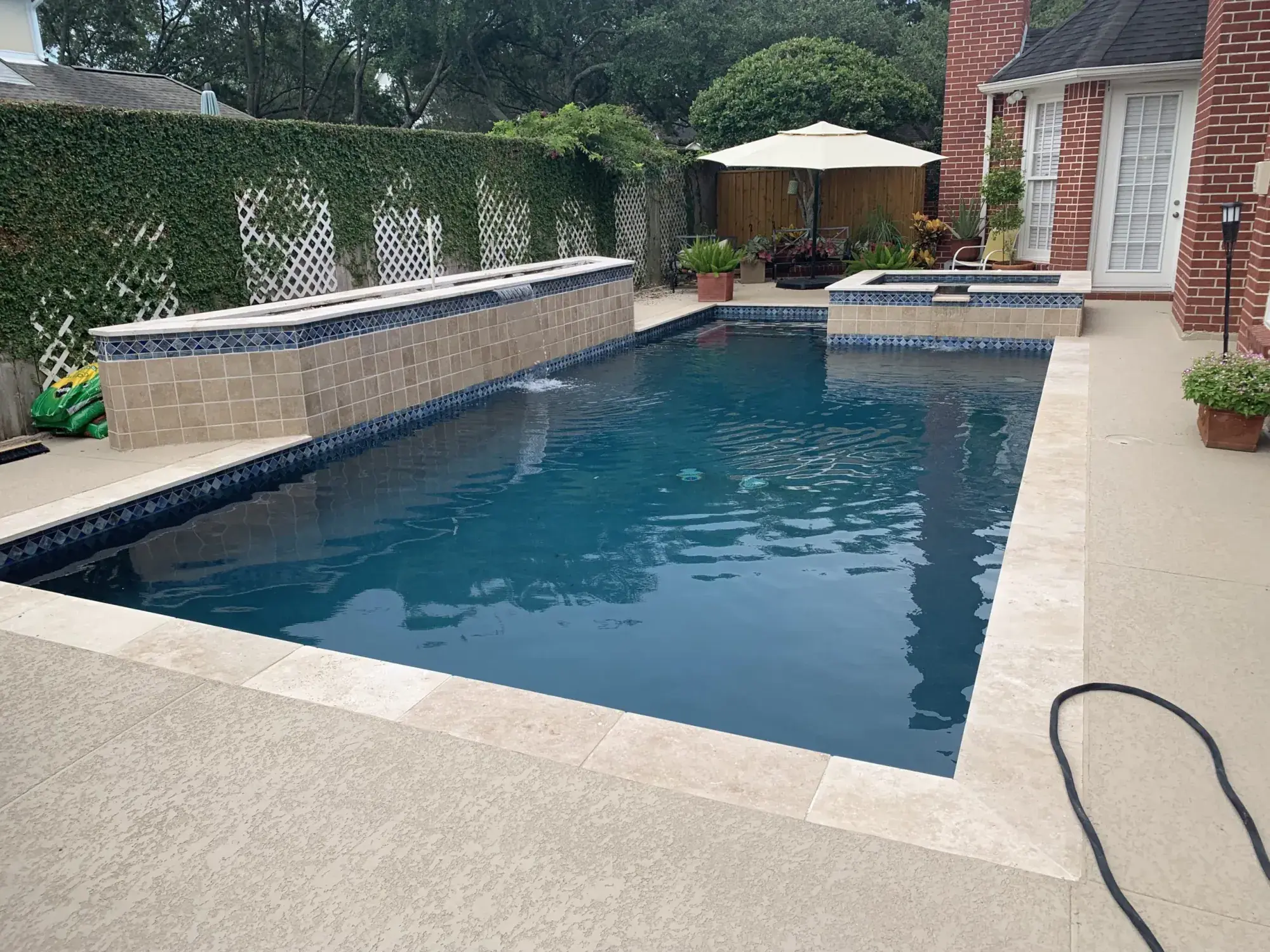
Most pools are built for lounging, and honestly, that's the right call for most families — I said as much in the plunge pool guide. But there's another customer I love building for: the swimmer. The person who wants to put in laps before work without driving to a gym pool that opens at six and smells like a locker room. For them, the pool is exercise equipment, and the dimensions are the product. Get them wrong and the pool never gets used for its purpose.
Length: the number that makes or breaks it
40 feet is my practical minimum for a pool you'll genuinely train in. At 40 feet a decent freestyle stroke gets a real rhythm going before the wall shows up. At 50–60 feet, it starts feeling like swimming instead of turning. Below about 35 feet, the swim becomes mostly turns — and turns are the part of lap swimming people burn out on.
Yard shorter than that? The honest answer isn't a shorter lap pool — it's a swim-current system in a smaller pool. The quality units produce a genuine adjustable current you swim against in place. The cheap jet packages, I'll be blunt, are theater — like jogging into a leaf blower. If stationary swimming is the plan, budget for the system that actually works; it's the difference between a daily habit and a demo feature.
Width and depth: comfort math
Width: 8 feet serves a solo swimmer fine. 10 feet is my recommendation when the pool has to multitask — it lets someone float or a kid paddle alongside without ending your workout at every pass.
Depth: constant 4 to 4.5 feet, and this is a hill I'll defend. Deep enough that your fingers don't scrape bottom mid-stroke and flip turns work; shallow enough that anyone can stand up anywhere, which is what keeps the pool safe and family-friendly. You don't want a deep end in a lap pool — it adds cost, eats heating efficiency, and serves no training purpose.
The features that make daily swimming stick
- A dark interior finish. Partly looks — that deep, elegant water like the pool in the cover photo — and partly function: a dark lane under you is easier on the eyes than glare-white plaster, and the water picks up a little more solar warmth in the shoulder seasons.
- A subtle lane line in the finish or tile. Sounds trivial; isn't. Swimming straight without sighting every third stroke is the difference between meditative laps and a chore.
- Heating — non-negotiable for real swimmers. The whole pitch of a backyard lap pool is consistency, and consistency means October through April too. A heater (or heat pump) turns the pool from a five-month toy into a year-round routine. Pair it with automation so the pool is at temperature when you wake up, not an hour after.
- Simple, snag-free walls. Benches, love seats, and ledges live at the ends or along the non-lane side — never protruding into the swim lane at rib height. You'd think that goes without saying. It does not.
The design trick: lap pools don't have to look like lanes
The old image of a lap pool is a swim lane dropped in a backyard. It doesn't have to be that. A 45-foot geometric pool with a tanning ledge at one end, a raised spa at the corner, and scuppers along a side wall is a beautiful pool that happens to have an uninterrupted 40-foot lane down its spine. The family gets their pool; you get your laps. That dual-purpose design is most of the lap-pool work we build — dedicated pure lanes are rarer, and honestly, the hybrids get used more.
If you're a swimmer with a Houston backyard, this is a genuinely great climate for the daily-swim life — eight-plus months without even trying, twelve with a heater. Call 713.462.0762 or request a free quote and we'll figure out what your lot can do.
Frequently asked questions
40 feet is the practical minimum for a satisfying swim — enough that you're swimming, not turning. 50–60 feet is better if the lot allows. Below 35 feet, consider a swim-current system instead of more turns.
For one dedicated swimmer, 8 feet wide works; 10 feet keeps a second swimmer or floating family from colliding with your workout. Depth should be a constant 4 to 4.5 feet — deep enough for flip turns and no touching bottom, shallow enough to stand anywhere.
The good ones do — a quality swim-current system gives a genuine stationary swim and is the honest answer for yards that can't take 40 feet of pool. The budget jet packages are more like swimming against a garden hose; if a real swim is the goal, the system quality matters.
Ready to talk about your pool?
Tell us what you need and we'll get back to you fast — usually the same day.
Keep reading
- How Much Does Pool Cleaning Cost in Houston? Here Are Our Actual Prices
Most pool companies make you call for a price. Here's exactly what weekly pool cleaning costs in Houston — our real plans, our real rates, and what moves the number up or down.
- What Pool Resurfacing Really Costs in Houston (From a Guy Who Writes the Quotes)
Real numbers, what actually drives them up or down, and how to read a resurfacing quote so you never get surprised. The pricing conversation I have at kitchen tables, written down.
- Pool Deck Resurfacing in Houston: Your Options, Honest Costs, and What Holds Up
Cracked, spalling, or just dated — the deck ages faster than the pool in Houston. Here's the full options ladder from reseal to travertine, with real per-square-foot numbers and what our clay soil does to each choice.