
July 6, 2026 · Venture Pool Company
The Best Time to Build (or Renovate) a Pool in Texas Isn't When You Think
Everybody calls a pool builder in April. The smart ones call in October. Here's the honest seasonal math on building and renovating in Texas — from the calendar side of the business.
There's a rhythm to the pool business that most homeowners never see. Our phones go quiet in October, stay calm through the holidays, and then sometime around the first 80-degree Saturday in March, all of Houston remembers they want a pool — at once. By April the whole industry's spring calendar is jammed, and families who call in May are getting told "we can start in July," which means swimming in October, which means the first real swim season is next year.
The people who beat that trap all did the same thing: they called in the fall.
The case for the off-season, honestly itemized
Permits and approvals move faster. City and county permit desks — and HOA architectural committees — have the same seasonality we do. A submission in November has less company than the same submission in April.
The schedule is yours. In the fall, the calendar has room: your project starts when it should and moves crew-to-crew without waiting behind six other digs. In peak season, every stage can queue.
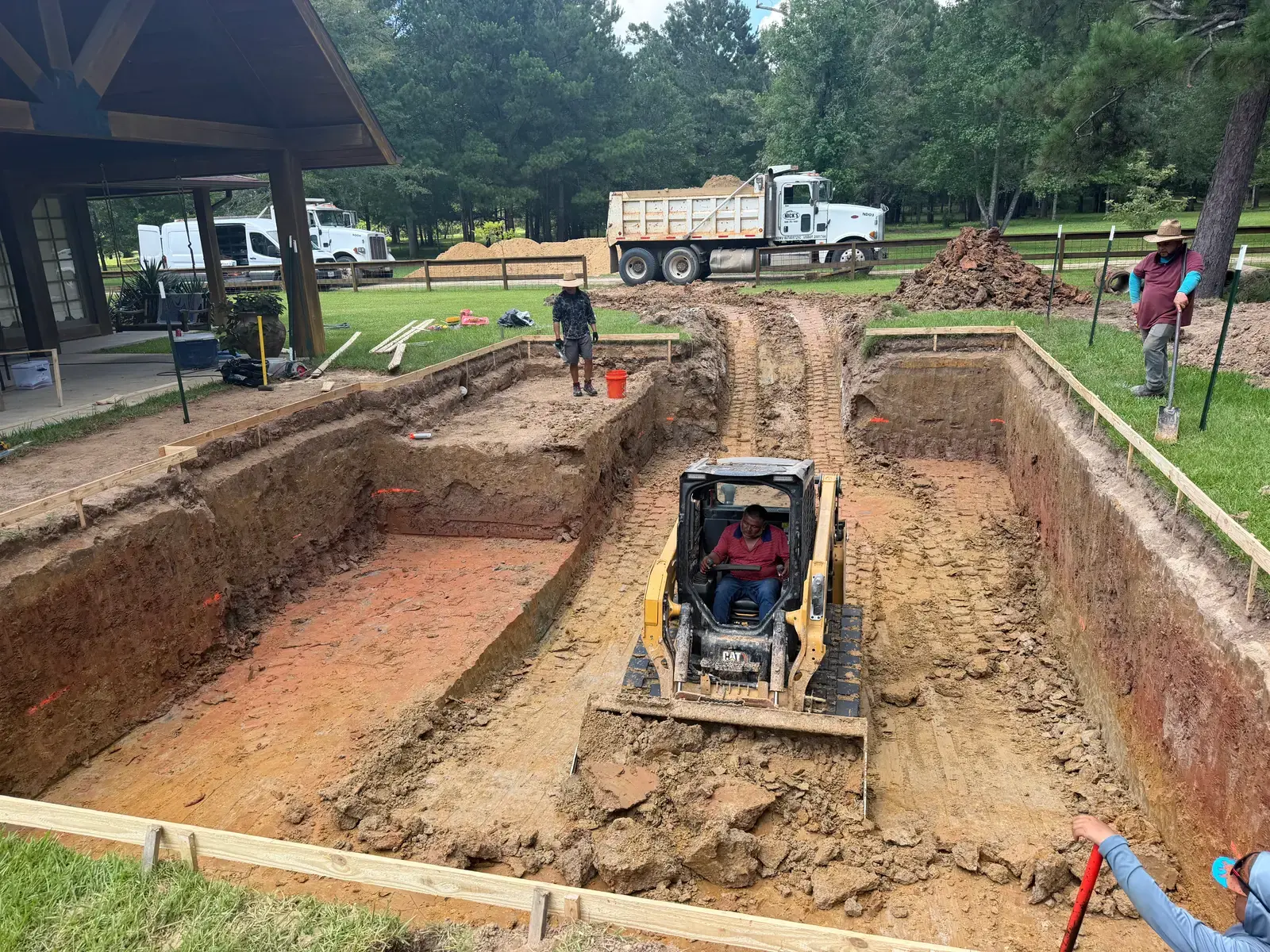
The ground cooperates. Here's one people don't expect: Houston winters are usually better digging weather than spring. Our clay soil is workable, and it's spring's soaked weeks — not winter's brief freezes — that stall excavations. The photo on this post is exactly what a well-run dig looks like; rain is what turns that pit into a delay.
Better conditions for the critical pours. Gunite and plaster both prefer moderate temperatures over 100-degree radiant heat. Crews working in 65 degrees instead of a heat advisory do their best work — mine included.
The finish line lands perfectly. This is the real prize. A build started in October or November finishes in the new year; equipment startup and finish curing happen over the cool months; and when that first warm weekend hits in March, your family swims while your neighbor is signing a contract with an August finish date. You gain an entire swim season with the same pool.
The one honest caveat: winter builds can hit a rain delay or a freeze-week pause just like any season — the difference is the schedule has slack to absorb it, and Houston winters are far gentler on construction than people assume.
Renovations: winter isn't just better, it's obvious
For renovations, the off-season logic is even cleaner, because a renovation takes your pool offline. Replaster in July and you've traded prime swim weeks for a construction zone. Replaster in January and you've traded... nothing — the pool was idle anyway, and it comes back with a fresh StoneScapes interior, new tile, and modern equipment right as the weather turns. If your pool is showing the signs it's due, the smart move is booking the winter slot before the spring crowd wakes up.
So when should you actually call?
Work the timeline backward. Design conversations, quote, and permitting eat 4–8 weeks before ground breaks; construction runs roughly 8–12 more. That means:
- Want to swim by early summer? Design conversations should be happening in October–December.
- Calling in spring? Totally fine — we build all year — just walk in knowing the queue is real and the finish date is later than the daydream.
- Renovating? Book for December–February and be the first great-looking pool on the block in March.
The pool you call about in October and the one you call about in April are the same pool — one of them just costs you a summer. Whenever you're ready, we're ready: 713.462.0762 or request a free quote.
Frequently asked questions
October through January. Permits move faster, schedules are open, the ground is workable, and a fall start means the pool finishes in time for the first warm weekend of spring — instead of finishing in August after a spring start.
Absolutely — Houston winters are mild enough for year-round construction. Freezes are brief and rare, the clay soil is often easier to work than in soggy spring, and crews aren't fighting 100-degree heat during gunite and plaster work.
Winter, by a wide margin. Nobody's swimming anyway, schedules are flexible, and a January replaster means a brand-new pool for March instead of losing swim weeks to a summer renovation.
Ready to talk about your pool?
Tell us what you need and we'll get back to you fast — usually the same day.
Keep reading
- How Much Does Pool Cleaning Cost in Houston? Here Are Our Actual Prices
Most pool companies make you call for a price. Here's exactly what weekly pool cleaning costs in Houston — our real plans, our real rates, and what moves the number up or down.
- What Pool Resurfacing Really Costs in Houston (From a Guy Who Writes the Quotes)
Real numbers, what actually drives them up or down, and how to read a resurfacing quote so you never get surprised. The pricing conversation I have at kitchen tables, written down.
- Pool Deck Resurfacing in Houston: Your Options, Honest Costs, and What Holds Up
Cracked, spalling, or just dated — the deck ages faster than the pool in Houston. Here's the full options ladder from reseal to travertine, with real per-square-foot numbers and what our clay soil does to each choice.