
July 6, 2026 · Venture Pool Company
The Real Signs Your Pool Is Due for a Renovation
Pools don't fail overnight — they send warnings for years. Here are the signs I actually look for when someone asks me whether their pool needs a remodel or just a repair.
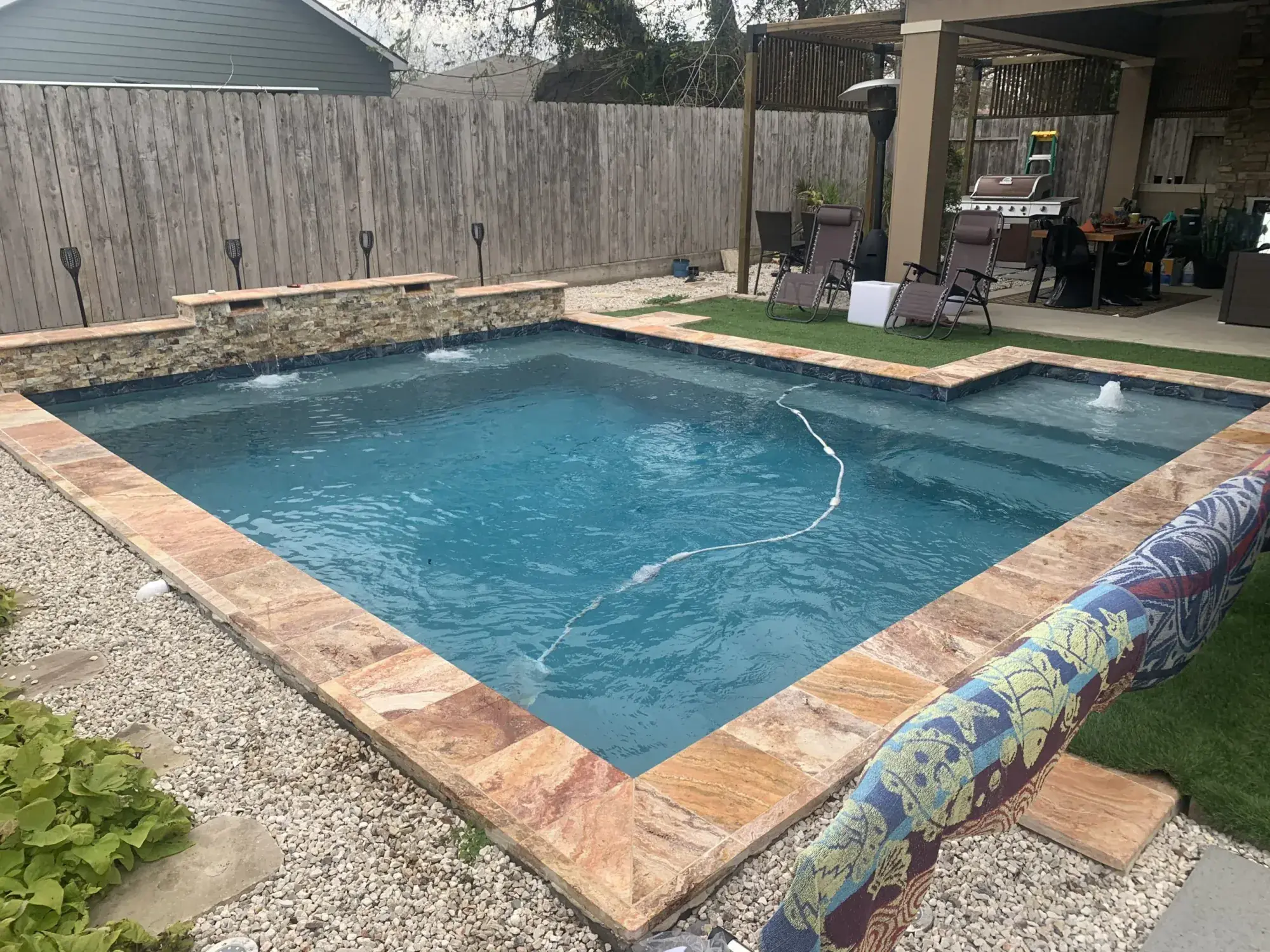
People are surprisingly loyal to a tired pool. I meet homeowners every month who apologize for their pool the way you'd apologize for an old truck — "it still works, mostly" — while the plaster's sanding their kids' feet and the pump on the pad is old enough to vote. So let me give you the honest checklist I use when someone asks me if it's time.
The finish is telling you first
The interior surface is almost always the first thing to go, and it announces itself:
Rough to the touch. Plaster at end of life feels like fine sandpaper. If swimsuits are wearing out and toes are getting scraped, that's not "character" — the smooth cream coat is gone and you're down to the aggregate.
Stains that don't brush off. Every pool picks up some staining, but when gray, brown, or black blotches shrug off a brush and a chlorine bath, the stain is in the surface, not on it.
Bare spots and shadows. Gray patches where the gunite shows through, or dark lines that hint at the steel below — the finish isn't just ugly at that point, it's no longer protecting the shell it was installed to protect.
Constant chemistry fights. Rough, porous plaster gives algae a thousand little footholds and drinks acid. If your pool eats chemicals and still won't stay balanced, an old finish is often the quiet culprit.
The tile line and coping chime in next
Falling or hollow tile. Waterline tile that's popping off, or sounds hollow when you tap it, means the bond behind it has failed — and Houston's soil movement plus the occasional hard freeze accelerate that.
Cracked or loose coping. Coping takes the brunt of deck movement. Cracks in the mortar joints, rocking stones, or gaps opening between coping and deck are structural conversations, not cosmetic ones — water getting behind the pool shell through those gaps causes the expensive problems.
Calcium crust you can't stop. A white scale line that keeps returning no matter how much you scrub usually means the tile surface has etched enough for scale to anchor. Cleaning helps for a month; new tile fixes it.
The equipment pad votes too
If your pump, filter, and heater date to the pool's construction, a renovation is the natural moment to modernize. A single-speed pump from 2005 costs several hundred dollars a year more to run than a variable-speed replacement — the equipment math usually pays for itself inside the remodel.
And sometimes the sign is simpler
Here's one straight from our renovation page, because it's real: the pool just looks dated. White plaster, 6-inch blue tile, and brushed concrete said "1998" because it was 1998. If you wince a little every time you look at the backyard, that counts. You don't need a structural excuse to want a pool you love looking at — a fresh pebble interior, modern tile, and new coping transform the whole yard.
What renovation actually involves
The typical full remodel we do: drain, chip out the old finish, new NPT StoneScapes pebble interior, new waterline tile and coping, and any equipment upgrades — usually 7–10 days of work for a replaster with tile and coping. The gunite shell underneath is good for many decades; you're replacing the wear layers, not the pool.
If several of the signs above sound like your backyard, get an honest assessment. Call 713.462.0762 or request a free quote — we'll tell you what actually needs doing and what can wait. We've been renovating Houston pools since 2003, and "wait a year, it's fine" is an answer we give more often than you'd think.
Frequently asked questions
Standard white plaster in Houston conditions typically goes 8–10 years before it's rough, stained, and thin. Pebble finishes like NPT StoneScapes routinely last 15+ years, which is why that's what we recommend when it's time to resurface.
Run your hand across the wall below the waterline. If it feels like sandpaper, snags a swimsuit, or leaves chalky residue on your palm, the finish is at end of life. Add visible rebar shadows, spreading stains that won't brush off, or bare gray spots, and you're past due.
Almost always renovate. A structurally sound gunite shell is the expensive part, and it typically outlives several finishes. A full remodel — new interior, tile, coping, and equipment — costs a fraction of a new build and gets you a pool that looks and runs like new.
Ready to talk about your pool?
Tell us what you need and we'll get back to you fast — usually the same day.
Keep reading
- How Much Does Pool Cleaning Cost in Houston? Here Are Our Actual Prices
Most pool companies make you call for a price. Here's exactly what weekly pool cleaning costs in Houston — our real plans, our real rates, and what moves the number up or down.
- What Pool Resurfacing Really Costs in Houston (From a Guy Who Writes the Quotes)
Real numbers, what actually drives them up or down, and how to read a resurfacing quote so you never get surprised. The pricing conversation I have at kitchen tables, written down.
- Pool Deck Resurfacing in Houston: Your Options, Honest Costs, and What Holds Up
Cracked, spalling, or just dated — the deck ages faster than the pool in Houston. Here's the full options ladder from reseal to travertine, with real per-square-foot numbers and what our clay soil does to each choice.