
July 6, 2026 · Venture Pool Company
What Your Pool Water Color Is Telling You (And What Makes It That Blue)
Pool water is a mood ring — green, yellow, brown, milky, or that perfect postcard blue, the color is information. Here's how I read it, plus the design secret behind why some pools photograph so well.
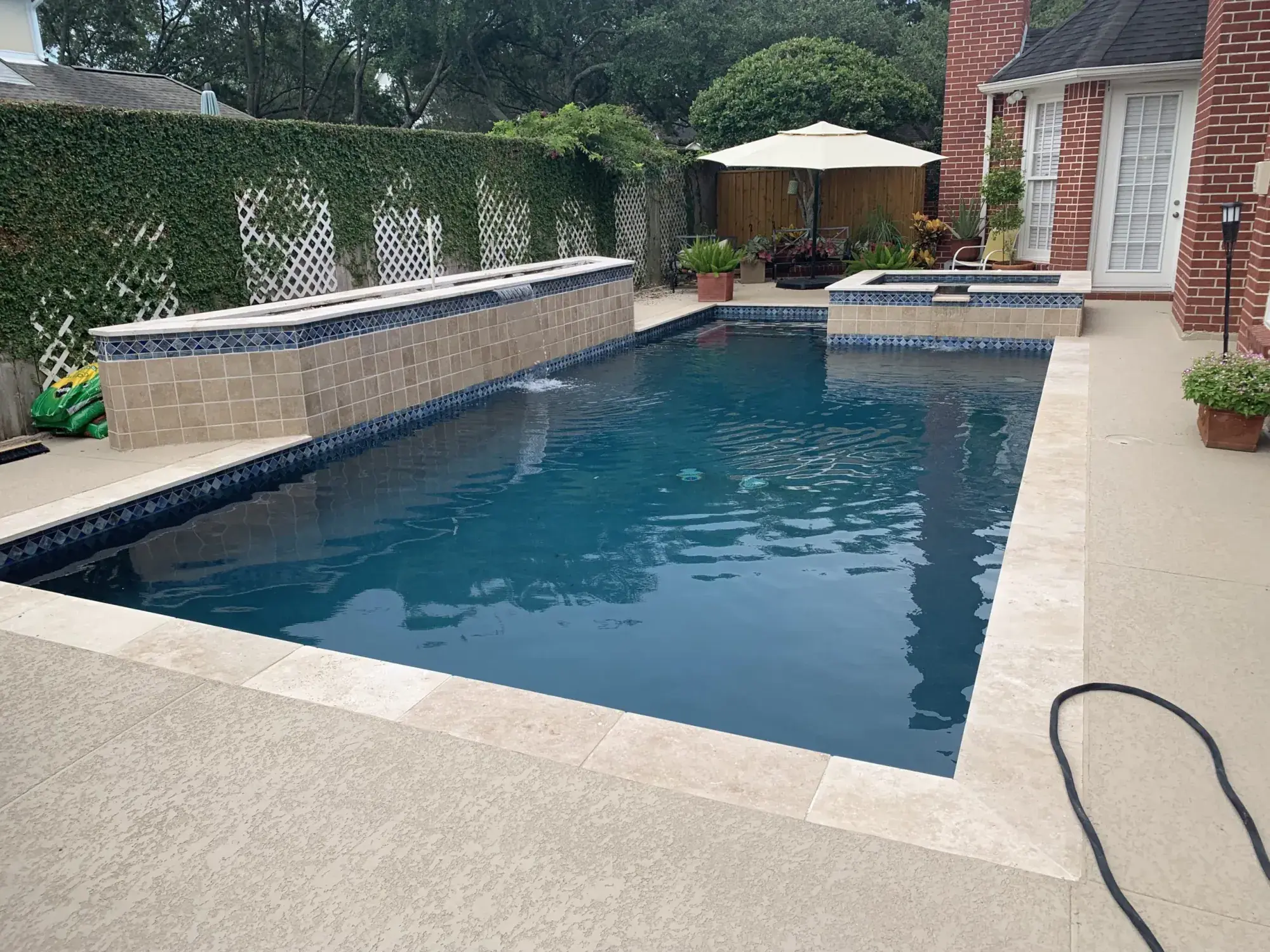
One of the underrated skills in this business is reading a pool from across the yard. The water's color and clarity tell you most of the story before a test kit ever comes out. So here's the diagnostic guide — what each color means and what to do about it — plus the part most people never think about: why two perfectly healthy pools can be completely different shades of blue.
The diagnostic colors
Sparkling, transparent blue. Healthy. Sanitized, balanced, filtered. Whatever you're doing, keep doing it.
Flat, dull blue. The pool has lost its sparkle — you can still see the bottom, but the light doesn't dance. This is early-warning territory: chlorine drifting low, pH drifting high, or a filter due for a cleaning. Caught here, it's a fifteen-minute fix. Ignored, it's next week's cloudy pool — I wrote a full cloudy-water guide for that stage.
Cloudy green. Algae, no mystery about it. The green is the algae itself, suspended in the water and coating surfaces. Chlorine crashed — storm, vacation, heat wave — and the bloom moved in. Shock, brush, filter around the clock. If you can't see the bottom step anymore, it's a green-to-clean job, and honestly, past a certain point it's cheaper to have it done right once than to fight it for three weekends.
Clear green or teal — but you can see the bottom fine. This one fools people. Crystal-clear water with a green tint usually isn't algae at all — it's copper. Well-water fills, copper algaecides, or a heater with old plumbing can all put copper in the water, and chlorine oxidizes it to that clear green. (It's also what turns blonde hair green — that's copper, not chlorine.) The fix is a metal sequestrant, not more shock.
Yellow-green dust on walls and floor that brushes off in a cloud. Could be two things in Houston: in spring, honest-to-goodness pine and oak pollen, which is a filtration chore, not an infection. Any other time of year, likely mustard algae — a stubborn, chlorine-resistant strain that loves shaded walls. Mustard algae needs aggressive brushing, a heavy shock, and patience; it's famous for coming back if you quit early.
Brown, rust, or tea-colored. Metals again — iron this time — or tannins from leaves stewing in the water. Rust-brown right after a fill or top-off points at iron in the source water (sequestrant, filter, patience). Tea-brown with a season's worth of leaves in the pool is nature's iced tea; get the organics out and the filter will do the rest.
Milky white. Not a color problem, a chemistry/filtration problem — high pH, high calcium (very Houston, our fill water runs hard), or a filter passing fine particles. Test, correct, filter continuously.
Black spots that won't brush off. Black algae — the roots grow into plaster pores. This is the one I'll tell you straight: it's a long fight, it usually means the plaster is aging and porous, and if it's widespread, that pool is telling you it's replaster time.
The design secret: healthy water comes in many blues
Here's the part I love talking about, because we get to control it on every build and renovation: water has almost no color of its own — you're mostly seeing the finish under it.
- Over white plaster, water reads bright, light aqua — the classic backyard look.
- Over light quartz or light pebble, you get that resort turquoise.
- Over gray or blue-gray pebble, the water turns a deep sapphire.
- Over darker finishes, you get the dramatic lagoon look — deep teal, incredible at sunset, and it hides pollen between cleanings better too.
Depth, sun, and even the sky play in — the same pool is a different blue at 8 AM than at 5 PM — but the finish is the master dial. When we do renovations, the finish selection is my favorite conversation, because with NPT StoneScapes pebble we can show you samples wet, in your yard, in your light. It's the difference between guessing off a showroom chip and knowing what your water will actually look like.
The takeaway
Color is information. Clear blue means carry on; anything else is your pool asking for something specific — and now you know what. If your water's gone a color you don't like — or you'd just like it to be a better blue — call 713.462.0762 or request a free quote.
Frequently asked questions
Two usual suspects: stabilizer buildup locking up your chlorine (it reads on the strip but can't kill anything), or it isn't algae at all — copper in the water turns it a clear teal-green, often after well water fills or copper-based algaecides. Cloudy green is algae; clear green is usually metal.
Mostly the interior finish color, plus depth and sunlight. Water over a white plaster finish reads light aqua; over gray or darker pebble it reads deep blue to lagoon-teal. The finish choice during a build or replaster is the single biggest control you have over your water's color.
Metals — usually iron — in the fill water, which oxidize when chlorine hits them. It's common with well water. A metal sequestrant and good filtration will usually clear it; avoid shocking heavily before sequestering or you'll drive the metals out of solution and into stains.
Ready to talk about your pool?
Tell us what you need and we'll get back to you fast — usually the same day.
Keep reading
- How Much Does Pool Cleaning Cost in Houston? Here Are Our Actual Prices
Most pool companies make you call for a price. Here's exactly what weekly pool cleaning costs in Houston — our real plans, our real rates, and what moves the number up or down.
- What Pool Resurfacing Really Costs in Houston (From a Guy Who Writes the Quotes)
Real numbers, what actually drives them up or down, and how to read a resurfacing quote so you never get surprised. The pricing conversation I have at kitchen tables, written down.
- Pool Deck Resurfacing in Houston: Your Options, Honest Costs, and What Holds Up
Cracked, spalling, or just dated — the deck ages faster than the pool in Houston. Here's the full options ladder from reseal to travertine, with real per-square-foot numbers and what our clay soil does to each choice.