
July 6, 2026 · Venture Pool Company
Pool Tile, Explained: Waterline, Mosaics, and What Actually Holds Up in Texas
Tile is the jewelry of the pool — and the part of a renovation people agonize over most. Here's how I walk customers through waterline tile, accents, and mosaics, and which materials survive Texas water.
When a renovation gets to the design conversation, nobody agonizes over the plaster color for long. It's the tile where people stall — hundreds of options, wildly different prices, and everybody's heard a story about tile falling off someone's pool. Fair enough. Here's the guide I wish every customer had before our first meeting.
Waterline tile: the working jewelry
That 6-inch band at the waterline isn't just decoration. It takes the worst abuse in the pool — wet-dry cycling, sun, scale, chemicals, and the occasional freeze — and it's also what your eye reads first from the patio. Material matters:
Porcelain is my workhorse recommendation. Dense, colorfast, handles Texas conditions without complaint, cleans up well, and comes in enough styles now — including very convincing stone and shimmer looks — that most people find what they want. Best value of the bunch.
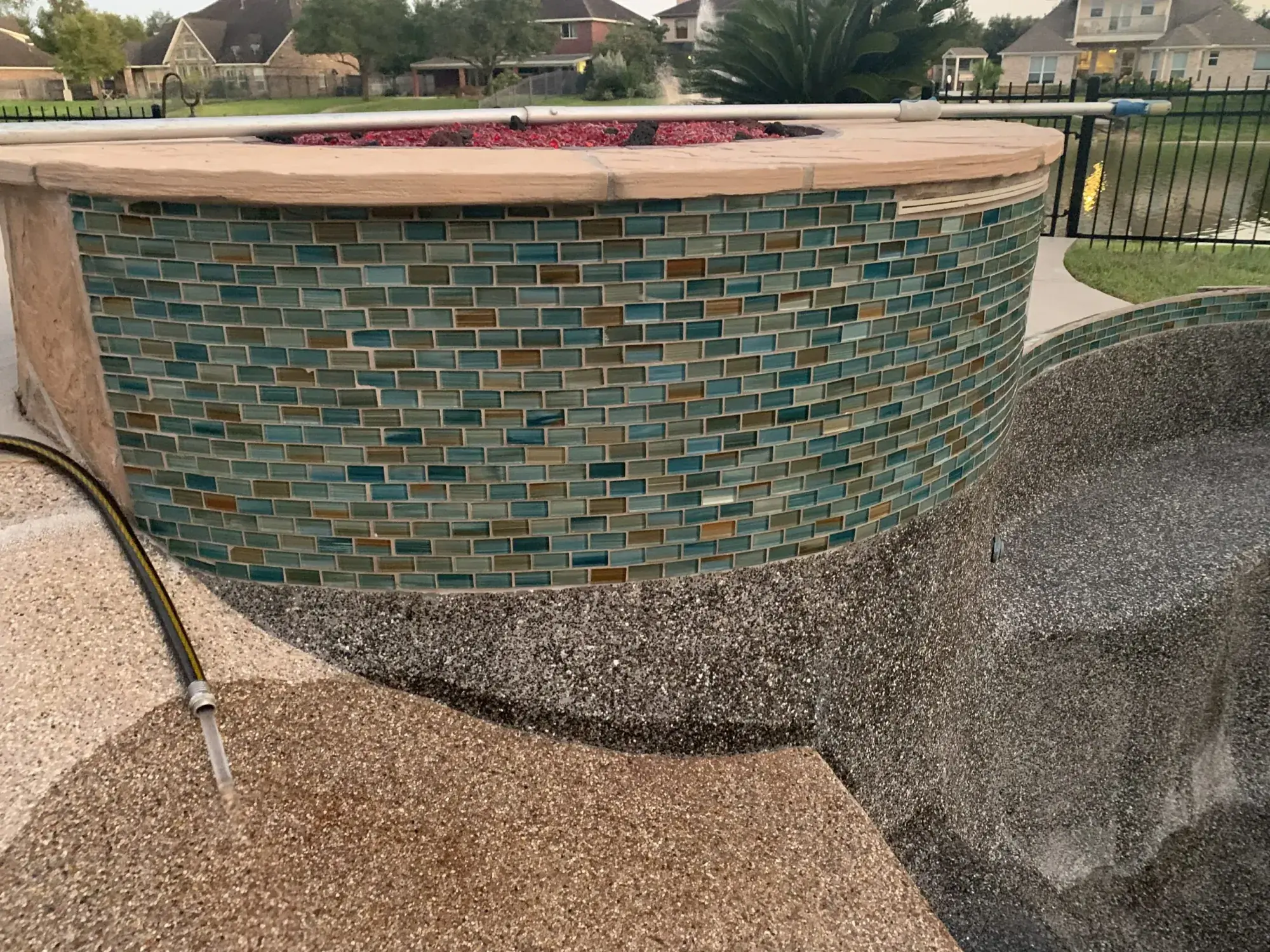
Glass is the showstopper. The light plays through glass tile, not just off it, which is what gives high-end pools that liquid shimmer — the spa in this post's cover photo is glass tile doing exactly that. It costs meaningfully more, and installation is less forgiving (it shows every flaw in the prep work), so it rewards a crew that does it often. Worth it on spas, raised walls, and accent bands even if the budget doesn't stretch to the full waterline.
Natural stone at the waterline — I'll be the contrarian: I usually talk people out of it. Stone is porous, and porous plus waterline plus Houston's hard water equals a scale line you'll fight forever. Stone belongs on the coping and the wall veneer, not in the splash zone.
Mosaics and accents: a little goes a long way
Mosaic medallions, step markers, swim-lane accents, scuppers lined in glass — this is where a pool picks up personality. My honest design advice after watching hundreds of these decisions age: restraint wins. A glass-tile band on the spa dam wall, tile step markers (which are also a safety feature), maybe one well-placed accent — those still look intentional in fifteen years. The pool floor covered in dolphin mosaics is a 2009 decision that someone's paying to chip out today.
The trend-proof combination I keep coming back to: a porcelain or glass waterline in a blue-to-sand palette, matching tile on the spa spillover, and let the StoneScapes pebble interior carry the color. Water and stone don't go out of style.
Why tile fails (and how to know if yours is going)
Tile doesn't fall off because the tile was bad — it falls off because the bond behind it failed:
- Grout ages out, water gets behind the tile, and freeze-thaw or just time breaks the bond.
- Houston's clay soil moves, the beam the tile sits on flexes, and rigid tile lines crack.
- Scale and etching slowly eat grout joints in hard-water pools.
Tap your tile line sometime. Solid tiles sound sharp; failed bond sounds hollow. A couple of hollow tiles can be re-set. A whole hollow-sounding run means the line is finished, and patching it piecemeal is throwing money at a lost cause.
The timing that saves you real money
If your pool needs resurfacing in the next couple of years and the tile is aging, do them together — the pool's already drained, the crew's already mobilized, and combined it's a 7–10 day project instead of two separate disruptions. I covered the full breakdown in the resurfacing vs. replastering guide.
Picking tile is genuinely fun when someone walks you through real samples against your own decking and light. That's how we do it — call 713.462.0762 or request a free quote and we'll bring the boards to your backyard.
Frequently asked questions
Porcelain and glass are the two I install with confidence. Porcelain is the durable workhorse with the friendliest price; glass gives you the depth and shimmer people fall in love with, at a higher cost. Both handle Texas water and sun — the key is proper installation with the right thinset and grout.
Failed bond behind the tile — usually water intrusion through aging grout, soil movement stressing the beam, or freeze expansion in a rare hard winter. One or two tiles can be re-set; widespread hollow-sounding tile means the whole line is due.
No, but it's the smartest time to do it. The pool is already drained and the crews are already there — new waterline tile during a resurface costs far less than the same tile as a standalone project later.
Ready to talk about your pool?
Tell us what you need and we'll get back to you fast — usually the same day.
Keep reading
- How Much Does Pool Cleaning Cost in Houston? Here Are Our Actual Prices
Most pool companies make you call for a price. Here's exactly what weekly pool cleaning costs in Houston — our real plans, our real rates, and what moves the number up or down.
- What Pool Resurfacing Really Costs in Houston (From a Guy Who Writes the Quotes)
Real numbers, what actually drives them up or down, and how to read a resurfacing quote so you never get surprised. The pricing conversation I have at kitchen tables, written down.
- Pool Deck Resurfacing in Houston: Your Options, Honest Costs, and What Holds Up
Cracked, spalling, or just dated — the deck ages faster than the pool in Houston. Here's the full options ladder from reseal to travertine, with real per-square-foot numbers and what our clay soil does to each choice.