
July 6, 2026 · Venture Pool Company
The 7 Pool Problems We Get Called About Most (And How to Troubleshoot Them)
After twenty-plus years of service calls across Houston, the same seven problems account for most of the phone calls. Here's how I troubleshoot each one — and when to stop and call a pro.
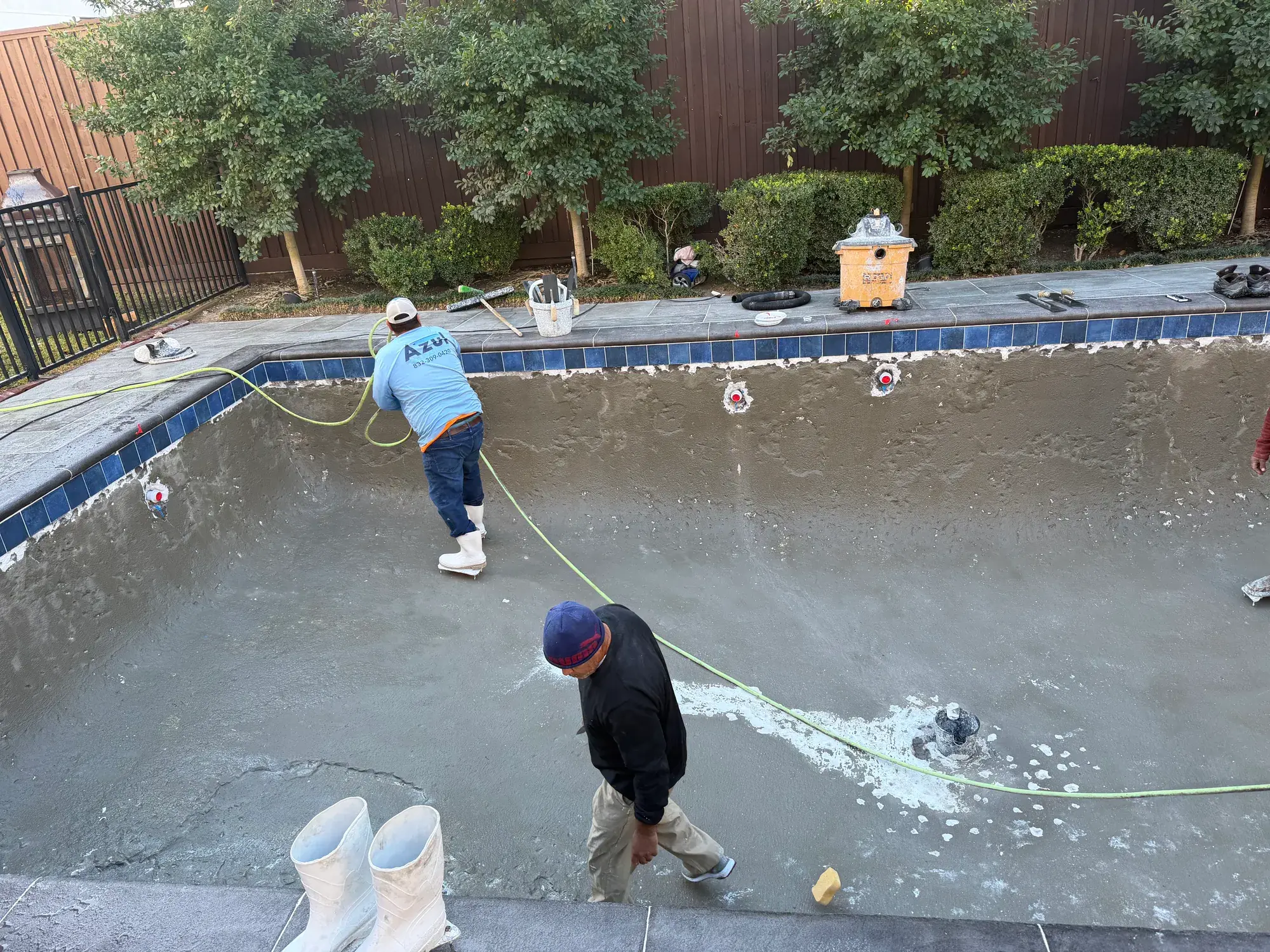
Twenty-plus years of running service routes across Houston teaches you something: pools don't invent new problems. The same seven issues account for the vast majority of our calls. Here's my honest troubleshooting guide for each — including where the do-it-yourself road ends.
1. Green water
The classic. Algae took over because chlorine dropped — after a storm, a vacation, a heat wave, or a stretch of neglect.
The fix: test, correct the pH, shock heavily, brush everything, and run the filter around the clock, cleaning it as it loads up. Most green pools in Houston can be cleared without draining. If the pool has been green long enough that you can't see the bottom step, read our green-to-clean guide or just call us — at that stage it's usually cheaper to have it done right once.
2. Cloudy water
Chemistry, filtration, or load. I wrote a full cloudy-water walkthrough, but the short version: test and fix chlorine and pH first, then run the filter continuously for 24–48 hours. If clean chemistry plus two days of filtering doesn't clear it, your filter — not your water — is the problem.
3. The pump won't prime
The pump is running but just churning air. Almost always a suction-side air leak, and the pump lid o-ring is the usual suspect — it's a two-dollar part that causes thousand-dollar worry.
Check in this order: water level at mid-skimmer, skimmer and pump baskets clear, pump lid o-ring clean and lubed, lid tightened properly. Still sucking air? Look at the valves and fittings in front of the pump. If everything above checks out and it still won't catch, the problem may be underground — that's a call-us situation.
4. A loud pump
Two different noises, two different diagnoses:
- Screeching or grinding = motor bearings dying. Here's my opinion, and it's a strong one: if it's an older single-speed pump, don't put money into bearings. Put that money toward a variable-speed pump — quieter than the old one ever was and typically saving several hundred dollars a year in electricity. The math almost always favors the upgrade.
- Rattling or gurgling = the pump is starving for water. That's problem #3 in disguise; check the suction side.
5. Low flow / weak jets
Water is moving but without conviction. Work through the path the water takes: skimmer basket → pump basket → filter pressure. A filter reading 8–10 psi above its clean pressure needs a cleaning or backwash. If the filter is clean and flow is still weak, the impeller may be clogged with debris — leaves and oak tassels love to lodge there after a storm.
6. Losing water
Every pool in Houston loses water to evaporation in the summer — up to a quarter inch a day in August, more if you run a spillover spa or water features. The question is whether you're losing more than that.
Do the bucket test (24 hours, bucket on a step, compare drops). If it points to a real leak: check the obvious stuff first — backwash valve not fully seated, a weeping equipment-pad fitting, an autofill stuck on masking a leak. Underground or shell leaks need professional detection equipment, and that's not a DIY road.
7. The heater won't fire
Heaters are the divas of the equipment pad. Before you call anyone: confirm the pool is getting good flow (heaters shut themselves off on low flow as a safety), the filter is clean, and the temperature is actually set above the water temp — you'd be surprised. If flow is good and it still won't light, stop there. Gas heaters are one of the two things I tell homeowners never to open up themselves, the other being anything electrical at the pad. Our repair techs are TDLR-licensed for exactly this work.
The pattern behind all seven
Almost every one of these problems is cheap when it's caught early and expensive when it's been cooking for a month. That's the honest case for weekly service — not that you can't do this yourself, but that a trained set of eyes on your pool every seven days catches the two-dollar o-ring before it becomes the emergency call. That's what our weekly maintenance routes are built around.
Stuck on something not on this list? Call us at 713.462.0762 or request a quote — describe the symptom and we'll tell you straight whether it's a DIY fix or worth a visit.
Frequently asked questions
The bucket test. Set a bucket of water on a pool step, mark the water line inside and outside the bucket, and wait 24 hours with the pump running normally. If the pool dropped noticeably more than the bucket, you're losing water to something other than evaporation.
A screech or grinding usually means the motor bearings are going; a rattling gurgle usually means the pump is starving for water — check for a clogged skimmer or suction-side air leak first. Bearings on an older single-speed pump are usually the moment to upgrade to a variable-speed instead of repairing.
Nine times out of ten it's an air leak on the suction side — most often the pump lid o-ring. Clean the lid, lube the o-ring, make sure water is at the right level and the baskets are clear. If it still won't catch, the leak may be underground or the impeller is clogged.
Ready to talk about your pool?
Tell us what you need and we'll get back to you fast — usually the same day.
Keep reading
- How Much Does Pool Cleaning Cost in Houston? Here Are Our Actual Prices
Most pool companies make you call for a price. Here's exactly what weekly pool cleaning costs in Houston — our real plans, our real rates, and what moves the number up or down.
- What Pool Resurfacing Really Costs in Houston (From a Guy Who Writes the Quotes)
Real numbers, what actually drives them up or down, and how to read a resurfacing quote so you never get surprised. The pricing conversation I have at kitchen tables, written down.
- Pool Deck Resurfacing in Houston: Your Options, Honest Costs, and What Holds Up
Cracked, spalling, or just dated — the deck ages faster than the pool in Houston. Here's the full options ladder from reseal to travertine, with real per-square-foot numbers and what our clay soil does to each choice.