
July 6, 2026 · Venture Pool Company
Winterizing a Pool in Texas: Don't Close It — Protect It
Texas pools don't get 'closed' like northern pools — they run all winter. What you actually need is a freeze plan. Here's mine, learned the hard way through every Houston freeze since 2003.
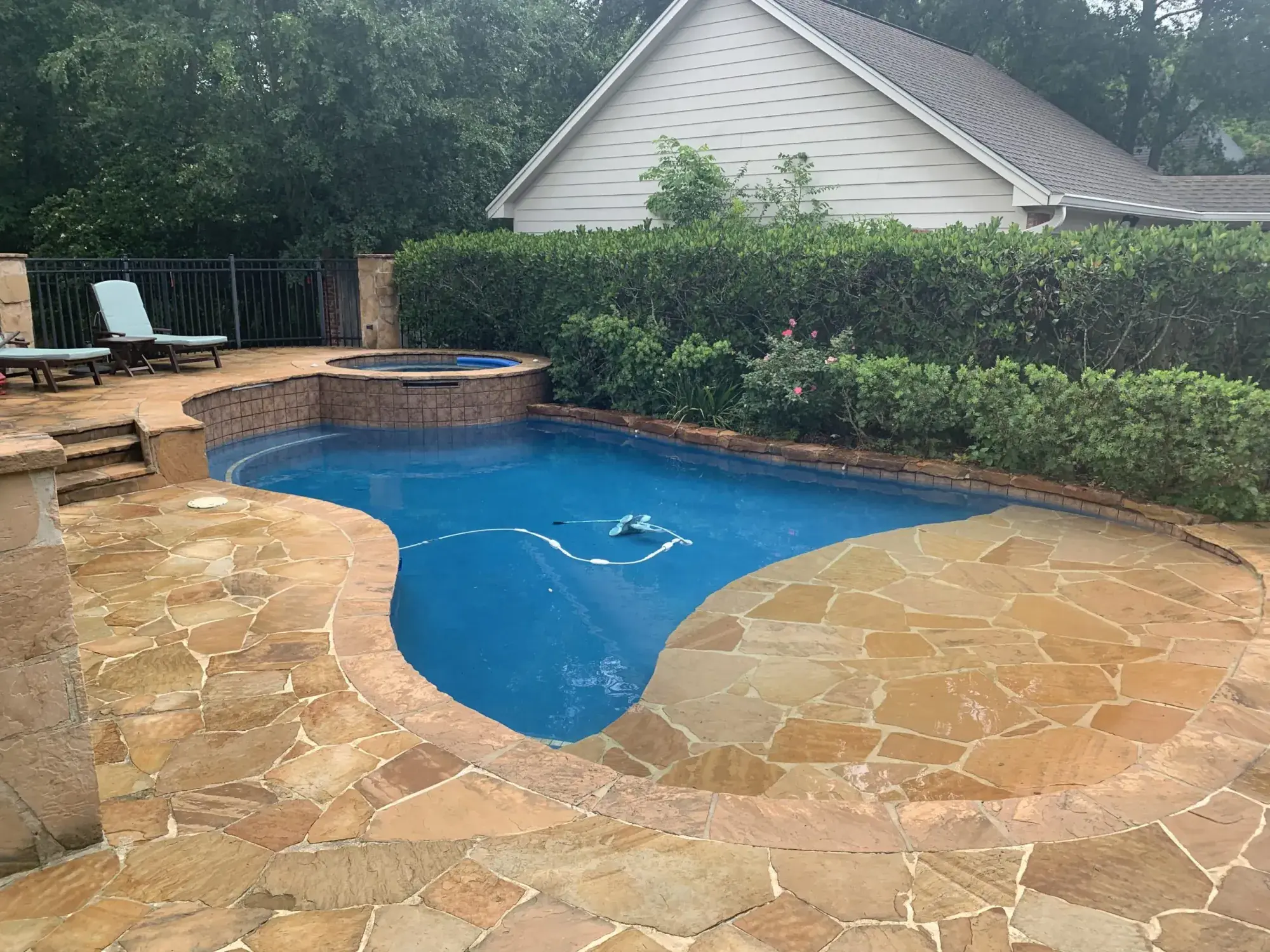
Every fall somebody new to Texas asks me when we "close" pools, picturing the northern ritual — drain it down, blow out the lines, stretch a cover, goodbye until May. Here's the thing: Texas pools don't close. They run all winter, and honestly, a Houston pool in January is the easiest version of itself all year — cool water barely grows algae and barely burns chlorine.
What a Texas pool needs isn't a closing. It's a freeze plan for the three or four nights a winter that get serious — and a real one for the once-every-few-years arctic blast we all remember.
The winter routine (the easy part)
From roughly November to February, here's what changes:
- Cut your run time. Summer needs 8–10 hours a day; winter needs about half that. Cool water is stable water, and this is where a variable-speed pump quietly pays for itself all over again.
- Keep the chemistry honest. Chlorine demand drops, but pH and alkalinity still drift — winter rain is basically free unbalanced water added to your pool weekly. Test weekly. The pools that come to us green in March are the ones that went untested from Thanksgiving on.
- Stay on the leaves. The oaks around here drop through fall and into winter. Leaves left on the bottom stain plaster and feed spring algae. Skimmer socks and a weekly netting keep it easy.
- Don't drain the pool. Ever, really, without a specific reason and a plan. An empty shell is at risk in our clay soils, and winter rain plus an empty pool is how shells crack or float. If water quality is that bad, that's a controlled drain-and-clean conversation, not a winterizing step.
The freeze plan (the part that matters)
A typical Houston freeze — 28 degrees for a few overnight hours — is a non-event if you do one thing:
Keep the water moving. Moving water doesn't freeze in pipes. Run the pump continuously from before the freeze until the temperature is back above freezing. Modern equipment pads have freeze protection that kicks the pump on automatically around 36 degrees — but that only works if the sensor works and nobody has flipped the system off at the breaker for the winter. We check freeze protection on our fall service visits for exactly this reason; if you're not sure yours works, find out in November, not the night of the freeze.
Beyond running the pump: insulate any exposed above-ground plumbing (foam sleeves are a few dollars), open the spa and water-feature valves so everything on the pad has flow, and keep the water level at mid-skimmer.
The big one: extended hard freezes
Every few years Texas gets a multi-day arctic event — everyone who was here in 2021 remembers. Days below freezing, rolling power outages. Different rules, one big decision:
- If you have power: run everything, continuously, days on end. Let the spa spill over. Moving water survives.
- If you lose power: you can't circulate, so switch missions from "keep it moving" to "get the water out of the equipment." Kill the breakers, then open the drain plugs on the pump, filter, and heater, and open the air relief on the filter. Water expands about 9% when it freezes and it will crack a pump housing or split a heater manifold. Ten minutes with the drain plugs is the difference between a normal week and a several-thousand-dollar equipment pad.
The pool itself, for the record, is fine — that huge body of water won't freeze solid in a Texas cold snap. It's the pipes and equipment that are vulnerable. After the 2021 freeze, essentially everything we replaced was equipment-pad damage, not pools.
Winter is also opportunity season
One more piece of owner advice: winter is the best time to schedule the big work. Renovations — replaster, tile, coping — are easiest to schedule when nobody's swimming, and a pool renovated in January is ready for the first warm weekend of March. Same logic for equipment upgrades. The spring rush is real; the winter calendar is friendly.
Want the freeze watch handled for you?
Our weekly service runs year-round — we set up freeze protection in the fall, keep the chemistry honest through winter, and when a hard freeze is coming, our customers hear from us before the weather hits. Call 713.462.0762 or get a free quote.
Frequently asked questions
No. Texas pools run year-round — winterizing here means adjusting run times, keeping chemistry balanced, and having a freeze plan for the handful of nights that need one. Draining and covering like a northern pool creates more problems than it prevents.
Keep water moving. Run the pump continuously through the freeze — moving water doesn't freeze in the pipes. If you lose power, shut the system down, kill power to the equipment, and drain the pump, filter, and heater so ice can't burst them.
Yes, though the job changes. Algae slows down but chemistry still drifts, leaves still fall, and equipment still needs eyes on it. Winter is also when small problems get diagnosed cheap — and when renovation work is best scheduled.
Ready to talk about your pool?
Tell us what you need and we'll get back to you fast — usually the same day.
Keep reading
- How Much Does Pool Cleaning Cost in Houston? Here Are Our Actual Prices
Most pool companies make you call for a price. Here's exactly what weekly pool cleaning costs in Houston — our real plans, our real rates, and what moves the number up or down.
- What Pool Resurfacing Really Costs in Houston (From a Guy Who Writes the Quotes)
Real numbers, what actually drives them up or down, and how to read a resurfacing quote so you never get surprised. The pricing conversation I have at kitchen tables, written down.
- Pool Deck Resurfacing in Houston: Your Options, Honest Costs, and What Holds Up
Cracked, spalling, or just dated — the deck ages faster than the pool in Houston. Here's the full options ladder from reseal to travertine, with real per-square-foot numbers and what our clay soil does to each choice.