
July 6, 2026 · Venture Pool Company
Saltwater vs. Chlorine Pools: My Honest Take After 20+ Years
Saltwater pools ARE chlorine pools — and once you understand that, the real decision gets a lot simpler. Here's how I walk customers through it.
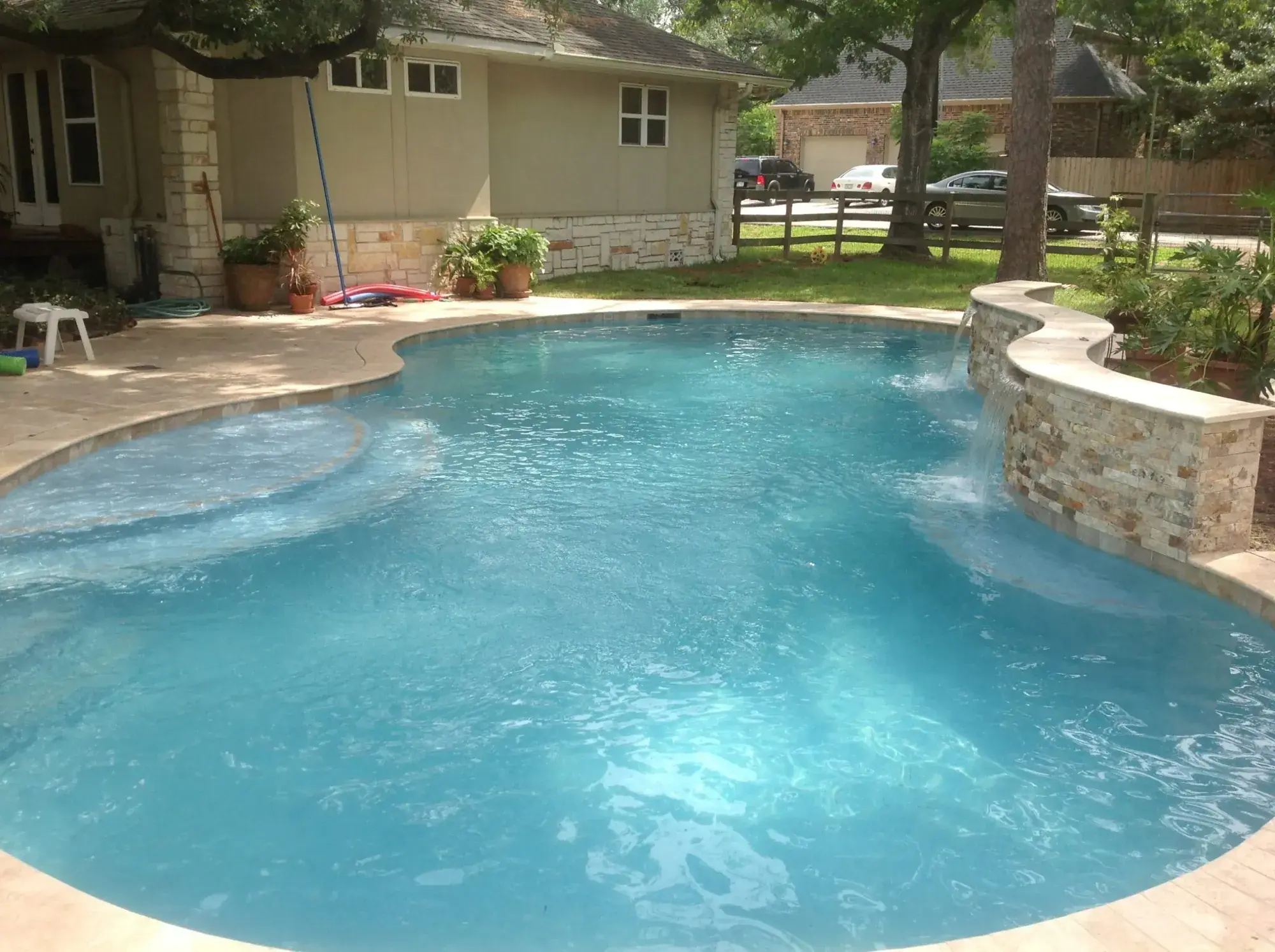
If I had a dollar for every time someone told me they want a saltwater pool "because I don't want chlorine," I could have retired years ago. So let me clear this up the same way I do standing in someone's backyard:
A saltwater pool is a chlorine pool. The difference is where the chlorine comes from. In a traditional setup, you (or your pool guy) add chlorine to the water. In a saltwater setup, a salt cell on your equipment pad quietly converts dissolved salt into chlorine as the water flows through it. Same sanitizer. Different delivery.
Once people understand that, the decision gets a lot less mystical. Here's how I actually think about it.
What I like about saltwater
The water feels better. That part of the sales pitch is true. The salt level is about a tenth of ocean water — closer to a teardrop than a beach — and it makes the water feel softer on skin and easier on eyes. Families with kids who practically live in the pool all summer notice it.
Chlorination is steady. Houston sun eats chlorine. In July, a pool that gets dosed once a week can swing from over-chlorinated on Tuesday to a green-light-for-algae by Sunday. A salt cell makes a little chlorine all day, every day, which keeps the level steadier between visits. Steadier chlorine means fewer surprises.
Less hauling and storing chlorine. No jugs in the garage, no puck bucket that makes the whole shed smell like a swim meet.
What the brochure doesn't tell you
The cell is a wear item. Salt cells last somewhere between 3 and 7 years depending on size, runtime, and how well the water was balanced. Replacements run roughly $500–$1,100. That's the real cost of saltwater — not the salt, which is cheap.
Salt pools push pH up. It's just what the chemistry does. If nobody's watching, a salt pool will drift high on pH, and high pH makes the chlorine you're generating less effective. You still have to test and balance. "Saltwater" is not a synonym for "no maintenance," no matter what the neighbor says.
Salt and stone are a long-term conversation. Splash-out on certain natural stone copings and decks leaves salt behind when it dries, and over years that can be rough on softer material. It's manageable — rinse the deck, seal the stone — but it's worth knowing before you choose materials. When we design a new build that's going saltwater, we pick coping with that in mind.
What I like about traditional chlorine
It's simple, the upfront cost is lower, and there's no cell to replace. If your pool is on a weekly service route — ours or anyone's — the "steady dosing" advantage of salt matters less, because a professional is testing and adjusting every week anyway. Liquid chlorine dosed weekly by someone who knows what they're doing keeps a pool every bit as clear.
One opinion I'll add: if you're maintaining the pool yourself with trichlor pucks in a floater, be aware that every puck adds stabilizer (CYA) to the water. Over a couple of Houston summers that stabilizer builds up until the chlorine can barely do its job, and the fix is draining water. That's not a chlorine problem — it's a puck problem — but it's the most common self-maintenance trap I see.
So which one do I recommend?
Honest answer: both work, and I build and service both every week.
- If you love the feel of the water, swim a lot, and don't mind a cell replacement every handful of years — go salt. Size the cell for a pool bigger than yours (I like a cell rated for roughly twice the actual gallons) so it isn't running flat-out all summer.
- If you want the lowest equipment cost and your pool is on weekly service anyway — traditional chlorine is completely fine, and the water will look identical.
What matters far more than salt-versus-chlorine is whether somebody is actually watching the chemistry every week. A neglected saltwater pool turns green just as fast as a neglected chlorine pool. Ask me how I know.
Want to talk it through?
If you're weighing a salt system for a new build or thinking about converting your current pool, call us at 713.462.0762 or request a free quote. We'll give you the straight math for your specific pool — including the honest answer if we think it's not worth it for your setup. Check out our equipment installation and repair page for more on what we install.
Frequently asked questions
No — and this is the biggest misconception in the industry. A saltwater pool uses a salt cell to generate its own chlorine from the salt in the water. It's still a chlorine pool; the chlorine just gets made automatically instead of being added by hand.
For most Houston pools, a quality salt system installed runs roughly $1,500–$2,500 depending on the cell size and your existing equipment. Budget for a replacement cell every 3–7 years as well.
Salt can be hard on certain natural stone and on softer coping over many years, mostly from splash-out that evaporates and leaves salt behind. Rinsing the deck now and then goes a long way. On the equipment side, a sacrificial anode is cheap insurance.
Ready to talk about your pool?
Tell us what you need and we'll get back to you fast — usually the same day.
Keep reading
- How Much Does Pool Cleaning Cost in Houston? Here Are Our Actual Prices
Most pool companies make you call for a price. Here's exactly what weekly pool cleaning costs in Houston — our real plans, our real rates, and what moves the number up or down.
- What Pool Resurfacing Really Costs in Houston (From a Guy Who Writes the Quotes)
Real numbers, what actually drives them up or down, and how to read a resurfacing quote so you never get surprised. The pricing conversation I have at kitchen tables, written down.
- Pool Deck Resurfacing in Houston: Your Options, Honest Costs, and What Holds Up
Cracked, spalling, or just dated — the deck ages faster than the pool in Houston. Here's the full options ladder from reseal to travertine, with real per-square-foot numbers and what our clay soil does to each choice.