
July 6, 2026 · Venture Pool Company
Pool Chemical Safety: How to Store and Handle the Stuff Without Drama
Pool chemicals are safe when treated with respect and genuinely dangerous when treated casually. Here's the storage and handling playbook I'd want every pool owner in Houston to know cold.
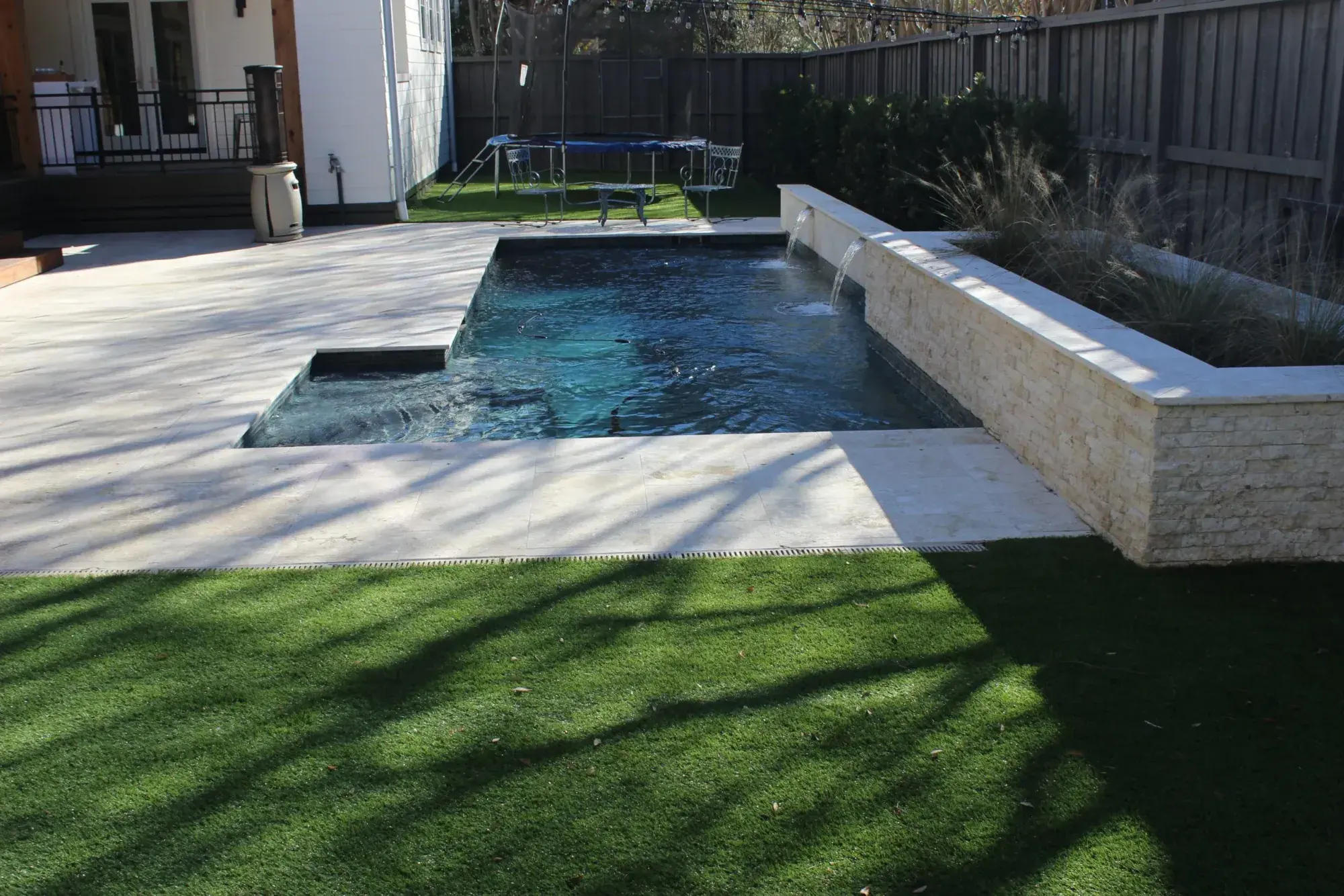
I want to be straight about tone here: pool chemicals aren't scary, and I'm not trying to make them scary — our techs handle them all day, every day, uneventfully. But every year around Houston somebody's garage shelf, pool shed, or over-enthusiastic mixing sends them to an ER visit that thirty seconds of knowledge would have prevented. So here's the playbook, minus the drama.
The three rules that prevent almost everything
1. Chlorine and acid never share a shelf. Trichlor pucks and muriatic acid are both standard pool supplies, and their fumes alone interacting can produce chlorine gas — the leading cause of pool-chemical incidents. Different shelves isn't enough in a sealed shed; give them separate, ventilated corners. If you ever open a chemical bin and get a sharp chemical bite in your nose, close it, step away, and let it air out before you work in there.
2. Never mix chlorine types. This is the one people don't know: trichlor pucks and calcium hypochlorite shock are both "chlorine," and combining them — even a scoop of shock into a bucket that used to hold puck fragments, even puck crumbs into the skimmer where shock was just poured — can generate enough heat to ignite. Dedicated scoops, dedicated buckets, one chemical each, forever.
3. Chemical into water, never water into chemical. When diluting anything — acid especially — the bucket gets water first, chemical second. Backwards, the concentrated chemical can react violently with the first splash of water and spatter. Old chemistry-class rule; still undefeated.
Storage that survives a Houston summer
The standard Houston chemical stash lives in a sealed backyard shed that hits 140 degrees by July, which is close to the worst option available. Heat accelerates chlorine breakdown — your pucks lose strength, and worse, they off-gas into the enclosed space, corroding every tool and hinge in there and greeting you with a chemical cloud each time you open the door.
Better:
- Ventilated, shaded, dry. A louvered cabinet on the shady side of the house beats a hot sealed shed. Ventilation is the single biggest upgrade.
- Off the concrete, lids tight, original containers. Labels matter when something goes wrong; mystery white powder in a repurposed bucket is how bad days start.
- Locked, or genuinely out of reach. Kids and dogs are creative. Liquid chlorine and acid at ground level behind a flimsy latch is not a plan.
- Away from gasoline, fertilizer, and the grill's propane. The garage corner where all the hazardous stuff huddles together is exactly the crowd chlorine shouldn't run with.
- Buy a season, not a warehouse. Chlorine loses potency in storage anyway — the Costco-scale stockpile is weaker by the time you use it and a bigger hazard the whole time it sits. This is one more quiet argument for liquid chlorine: what you buy this month, you use this month.
Handling, the two-minute version
Add chemicals to the pool one at a time, with the pump running, and give each 15–20 minutes of circulation before the next. Pour with the wind at your back — sounds folksy, saves your eyes. Rinse measuring gear before and after. And acid deserves respect every single time: eye protection isn't paranoia when a splash means an ER visit.
Never pre-mix anything in a bucket "to save a trip." The pool is the mixing container; that's the whole design.
The disposal question nobody answers
Old chemicals go to your county's household hazardous waste collection — Harris County runs regular drop-off events. Not the trash, not the storm drain, and please not "just dump it in the pool to use it up" if you don't know what it is. Unlabeled mystery chemicals are exactly what those collection days exist for.
Or — the option I'm obligated and happy to mention — you can own a pool and store almost nothing: our weekly service techs bring what your pool needs each visit, dose it professionally, and take the hazmat storage problem off your property entirely. For a lot of families with young kids, that's quietly one of the biggest reasons they switch. Call 713.462.0762 or get a quote if that sounds like relief.
Frequently asked questions
Chlorine and muriatic acid are the marquee bad couple — their fumes alone reacting can produce chlorine gas. Store them apart, ideally in separate ventilated areas, never stacked or sharing a shelf. And never mix different chlorine types (trichlor pucks and cal-hypo shock) — that combination can ignite.
Cool, dry, ventilated, shaded, off the ground, and locked away from kids and pets — and NOT in a sealed hot shed baking at 140 degrees. A ventilated, shaded cabinet outside the garage is better than a hot enclosed garage corner next to the lawn mower's gas can.
Yes — the rule is always chemical INTO water, never water into chemical. Adding water to concentrated chemical (especially acid) can cause violent reactions and splattering. When diluting anything, fill the bucket with water first.
Ready to talk about your pool?
Tell us what you need and we'll get back to you fast — usually the same day.
Keep reading
- How Much Does Pool Cleaning Cost in Houston? Here Are Our Actual Prices
Most pool companies make you call for a price. Here's exactly what weekly pool cleaning costs in Houston — our real plans, our real rates, and what moves the number up or down.
- What Pool Resurfacing Really Costs in Houston (From a Guy Who Writes the Quotes)
Real numbers, what actually drives them up or down, and how to read a resurfacing quote so you never get surprised. The pricing conversation I have at kitchen tables, written down.
- Pool Deck Resurfacing in Houston: Your Options, Honest Costs, and What Holds Up
Cracked, spalling, or just dated — the deck ages faster than the pool in Houston. Here's the full options ladder from reseal to travertine, with real per-square-foot numbers and what our clay soil does to each choice.